
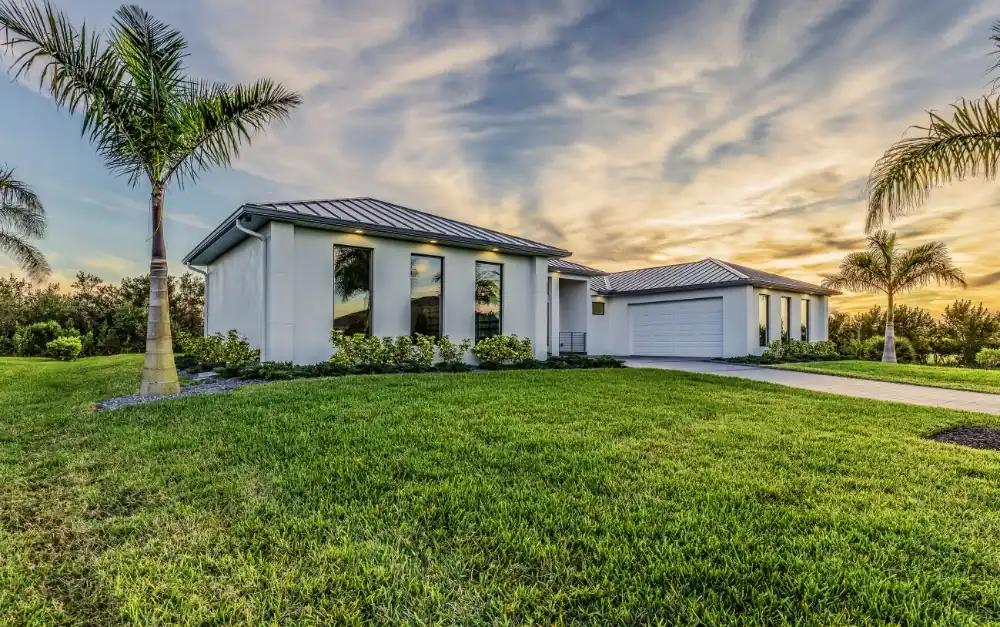
Strongest residential wind rating + max insurance discount
Standing seam achieves up to 175+ mph design-wind on engineered installs — clears any HVHZ exposure category and earns the largest wind-mitigation insurance discount available in Florida.
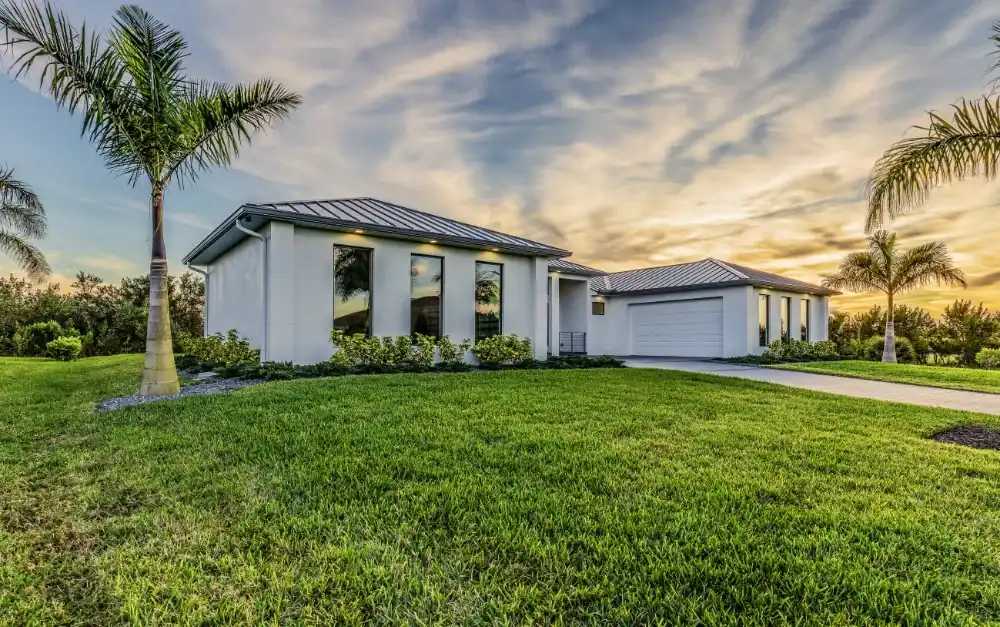
Standing seam metal roofing delivers the longest lifespan, the strongest wind performance, and the highest resale-value impact of any residential roof system. SafeGuard installs Drexel, Berridge, and Englert standing seam systems across South Florida under FL DBPR Roofing Contractor license CCC1336241 — Florida Product Approval verified per panel + clip + fastener, full permit pathway handled in-house.
Reviews
Coastal · architectural · long-hold
Standing seam achieves up to 175+ mph design-wind on engineered installs — clears any HVHZ exposure category and earns the largest wind-mitigation insurance discount available in Florida.
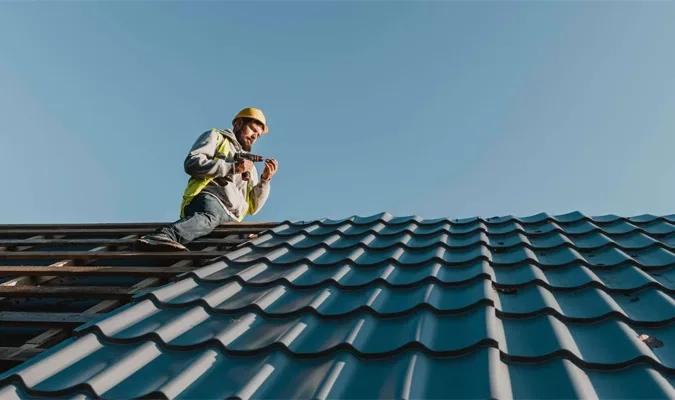
Florida requires a Certified Roofing Contractor license to pull a roof permit. SafeGuard files under FL DBPR CCC1336241, with FPA verified per panel + clip + fastener, and stays on the permit through dry-in + final.
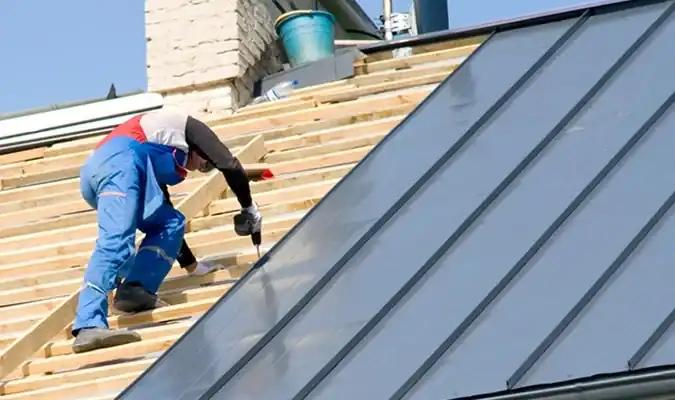
We install the four major standing seam systems. Choice typically hinges on the architect's spec, the panel profile that fits the wind-load calc, and our crew's local availability — never a one-line catalog.
At a Glance
TL;DR
Standing seam metal roofing pairs vertical interlocking panels (typically 12-18 inches wide, with 1.5-2 inch raised seams) with concealed clips that fasten to the deck — so no fasteners penetrate the visible panel surface. The result is the strongest wind uplift performance of any residential roof system, a 50+ year service life, and a lifetime paint warranty on Kynar 500 finishes.
Standing seam is gaining share fast in South Florida coastal cities — and the market data shows why. The system pairs three engineering advantages: (1) concealed-fastener attachment that eliminates the sealant failures common on exposed-fastener metal roofs, (2) factory-applied Kynar 500 PVDF paint coatings that carry lifetime warranties against fade and chalk, and (3) panel + clip + fastener combinations that earn engineered uplift ratings up to 175+ mph design wind — the strongest in the residential market.
Coastal exposure makes the lifespan calculus shift in metal's favor. Salt-air exposure shortens asphalt shingle lifespan by 5-10 years vs interior states; concrete tile is durable but adds dead load that older South Florida home decks weren't engineered for. Standing seam aluminum or Galvalume steel handles the corrosion + UV + cyclic-pressure environment for 50+ years on a properly engineered install. Florida insurance carriers price the wind-mitigation discount accordingly — a metal roof's 175+ mph rating is the single largest contributor to the wind-mitigation portion of your premium.
SafeGuard installs Drexel, Berridge, Englert, and McElroy standing seam systems under FL DBPR Roofing Contractor license CCC1336241. Every install is filed under our license with sealed engineered plans, a Florida Product Approval verified per panel + clip + fastener, and the wind-mitigation report you'll need for your insurance carrier at project close-out.
Answer
Standing seam is the residential premium — concealed fasteners, vertical panels, 50+ year lifespan, lifetime paint warranty. Corrugated metal (R-panel, exposed-fastener) is the agricultural/industrial product — cheaper but with sealant failures every 15-20 years. Metal shingle imitates traditional roof aesthetics with metal-panel durability — a niche residential category.
Standing seam is what most buyers mean when they say "metal roof" today. Vertical panels in 12-18 inch widths, 1.5-2 inch raised seams that lock together (snap-lock for residential, mechanical-lock for high wind), concealed clips that fasten to the deck. No exposed fasteners on the visible panel surface. Best-in-class for residential.
Corrugated / R-panel / exposed-fastener systems are what you see on agricultural buildings, equipment sheds, and budget commercial. The screws penetrate the visible panel with neoprene washers; those washers fail in 15-20 years and require sealant maintenance. Cheaper upfront ($8-$12/sq ft installed vs $15-$30 for standing seam) but lower lifecycle value. Not recommended for primary residential application.
Metal shingle mimics asphalt shingle, slate, or tile aesthetics with stamped metal panels. Same metal substrate durability (50+ year lifespan) as standing seam but in a shingle-like form factor. Niche category — useful when an HOA forbids vertical-panel aesthetics but allows metal substrate.
| Standing seam metal | Asphalt shingle | |
|---|---|---|
| Lifespan | 50+ years | 20-25 years (climate-shortened) |
| Wind rating | Up to 175+ mph | 150 mph (Class H ASTM D7158) |
| Insurance discount | Highest (max wind-mit credit) | Standard wind-mit credit |
| Maintenance | Negligible — wash + inspect | Periodic patch + algae treatment |
| Salt-air resistance | Excellent (Galvalume / aluminum) | Reduced lifespan in coastal |
| Resale value impact | +5-7% on coastal homes | Neutral to slightly positive |
| Upfront cost | $15-$30/sq ft installed | $8-$15/sq ft installed |
| Total cost over 50 yrs | 1× install + minimal maintenance | 2× install + maintenance |
Measure the roof, document existing system condition, identify any deck or framing issues. Review the wind-load calc (HVHZ Exposure C/D), the manufacturer-system options (Drexel, Berridge, Englert, McElroy), and the panel profile that fits the architecture (1.5" snap-lock for inland, 2" mechanical-lock for coastal high-exposure).
Pair each component (panel + clip + underlayment + fastener pattern) with its Florida Product Approval number. The FPA package is what the inspector verifies at every inspection. Submit sealed plans + FPA per material + Notice of Commencement for projects over $2,500.
Remove existing roof down to the structural deck. Inspect for rotted plywood, fastener pull-through, and prior unpermitted patches. Replace deck panels per square foot if surprises show up. Standing seam requires a dimensionally stable deck — most South Florida homes need ¾" plywood minimum on 16" centers.
Self-adhered modified bitumen membrane is the HVHZ-required underlayment. Install per manufacturer + FPA spec, call for the dry-in inspection. The inspector verifies the membrane manufacturer + FPA + roll spacing + nailing pattern. The roof can't load metal panels until dry-in passes.
Install panels per manufacturer spec, snap or mechanically lock seams, set ridge cap and gable trim, install ventilation. Concealed clips fasten to the deck on engineered spacing — typically 16-24 inches. Pannelization is on the roof; cleating + termination is hand-formed by the crew. Day 2-4 of the install on a typical 2,000 sq ft home.
Call for final inspection. Inspector verifies clip spacing, fastener pattern, ridge detail, flashings against the engineered plan. We close the permit on-site at final, register the manufacturer warranty in your name, and provide the wind-mitigation report (signed by the engineer) that you give your insurance carrier for the wind-mit discount calculation.
From our project library
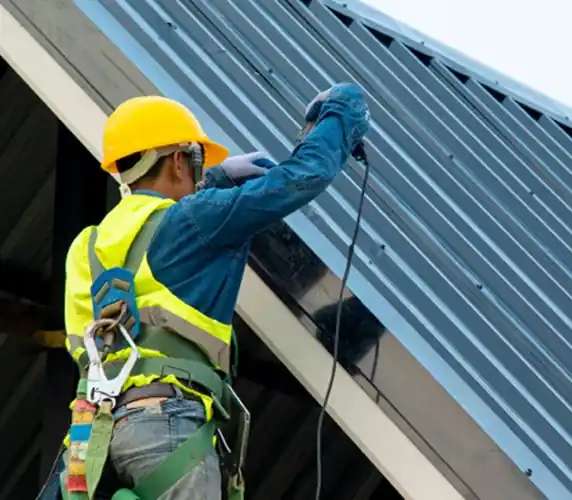
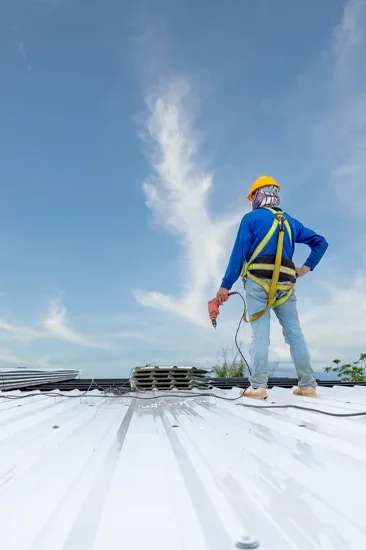
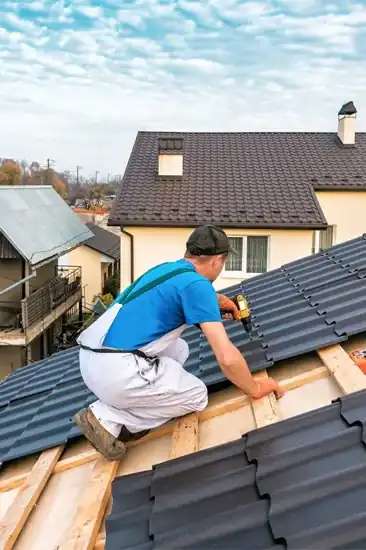
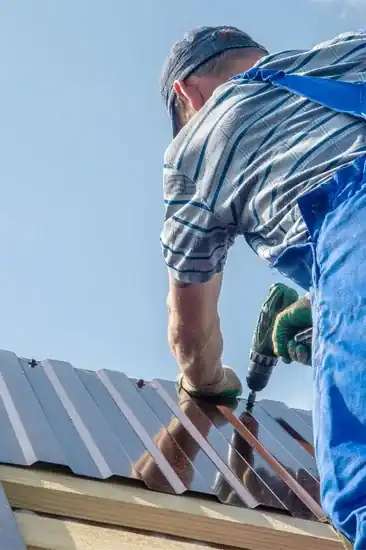
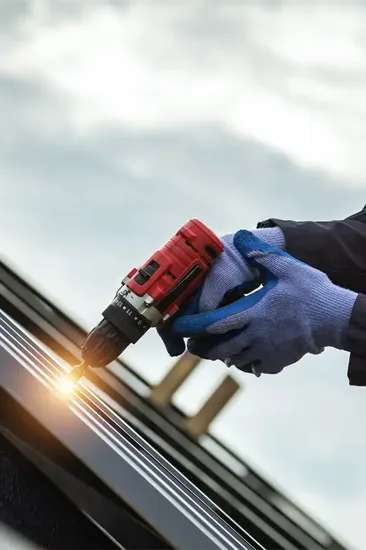
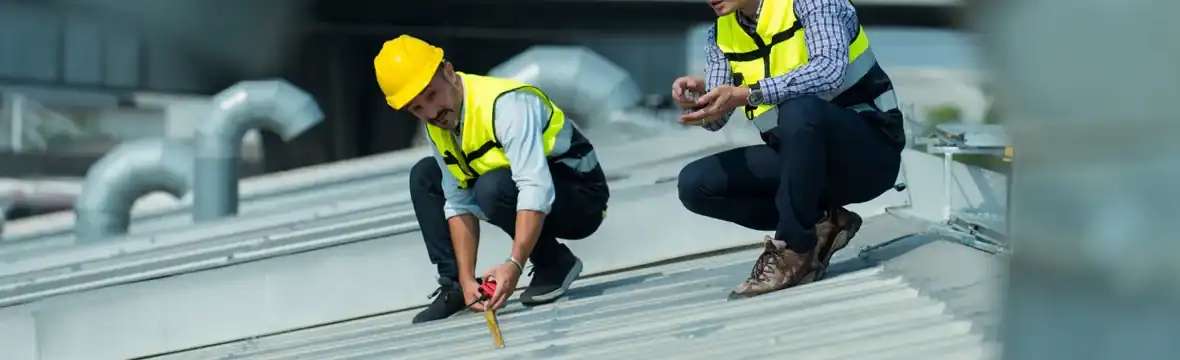
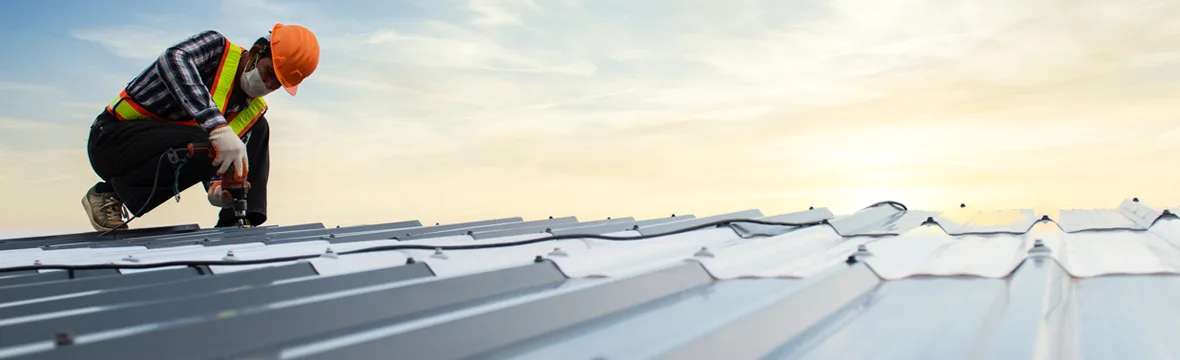
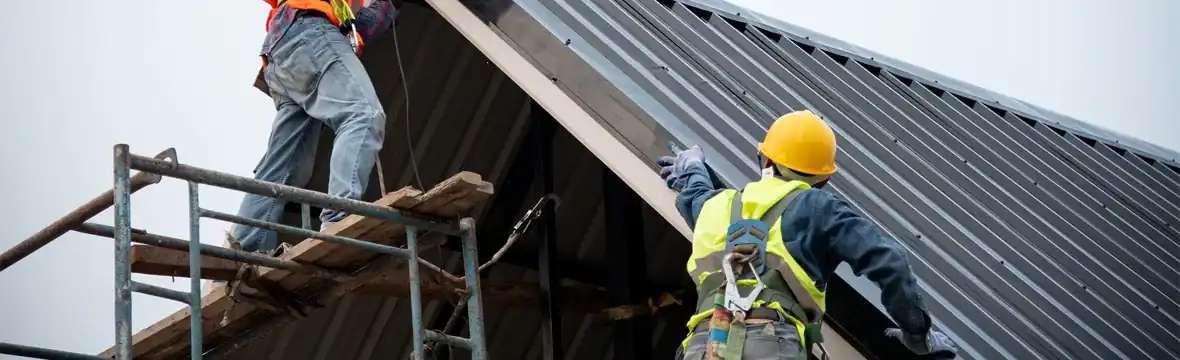
Real SafeGuard installs from the JobNimbus library — Drexel + Berridge standing seam systems on coastal and inland South Florida homes.
Project scope
Concealed-fastener standing seam (residential premium) vs exposed-fastener corrugated/R-panel (agricultural/industrial). Standing seam wins on lifespan + paint warranty; corrugated wins on upfront cost only.
Learn moreAluminum substrate + 2" mechanical-lock seams + engineered fastener pattern for coastal exposure (ASCE 7 Exposure D). Required on oceanfront and within ~1500 ft of large open water.
Learn moreMost-installed residential system in South Florida. ASTM D7158 Class H wind rating (150 mph), 25-30 year manufacturer warranty, lowest installed cost per square. GAF, Owens Corning, CertainTeed lines.
Learn moreMediterranean South Florida aesthetic — 50+ year lifespan, strongest resale value impact in the coastal market. Eagle, Boral, MCA product lines. Requires deck-load review on older homes.
Learn moreTPO + modified bitumen single-ply systems for commercial properties, residential additions, and lanai roofs. Carlisle, Mule-Hide, GAF product lines. 20-30 year warranties.
Learn moreFull roof replacement on any of the four systems — shingle, tile, metal, flat. Full permit pathway, dry-in + final inspections, manufacturer warranty registration, wind-mitigation report.
Learn moreFrequently asked
Standing seam metal roofing in South Florida runs $15–$30 per square foot installed, depending on panel material (Galvalume steel cheapest, aluminum mid, zinc + copper premium), panel profile (1.5" vs 2" seam height), and roof complexity (hips, valleys, dormers). A 2,000 sq ft single-family home with a Drexel or Berridge Galvalume system typically runs $30,000–$60,000 with permit. Premium aluminum or zinc systems run higher. The premium over asphalt shingle (~50-100% more upfront) is offset by 2× the lifespan + zero maintenance + the largest available wind-mitigation insurance discount.
50+ years on Galvalume steel or aluminum substrate with proper installation. The Kynar 500 PVDF paint finish carries a lifetime fade-and-chalk warranty (typically 30-50 year manufacturer-warranty terms). The substrate itself doesn't UV-degrade, doesn't crack, doesn't curl, doesn't lose granules. Installation-related issues (clip spacing, sealant joints at penetrations) are the only typical service items — and we cover those in-house through our installation warranty.
For long-hold ownership and coastal exposure: yes. Metal lasts 2× as long, achieves the highest wind-mitigation insurance discount available, and shrugs off salt-air exposure that shortens asphalt shingle lifespan in coastal South Florida. The trade-off is upfront cost — standing seam runs ~50-100% more than shingle. The payback math depends on how long you'll own the home: under 7-10 years, shingle is the better economic choice; over 15 years, metal almost always wins on total cost of ownership.
No — modern standing seam over a properly built deck is barely louder than asphalt shingle in the same conditions. The sound-amplification stereotype comes from agricultural metal roofs installed directly over open framing with no decking and no underlayment. Residential standing seam systems install over solid plywood deck + self-adhered membrane underlayment, both of which absorb sound. Most homeowners report no audible difference vs their previous shingle roof.
No — metal roofs do not attract lightning. The myth is widespread but isn't supported by NFPA or Lightning Protection Institute data. Metal roofs do conduct electricity if struck (which is actually safer than non-conductive materials that would burn), but they don't increase the probability of being struck. If lightning protection is a concern, a Lightning Protection Institute (LPI) certified system can be added — but it's the same recommendation regardless of roof material.
Yes — typically the largest available wind-mitigation discount in Florida. The roof-attribute portion of your wind-mitigation premium is calculated based on roof covering rating (FBC-HVHZ rating + uplift class), deck attachment, secondary water resistance, roof shape, and gable end bracing. A standing seam metal roof maxes out the roof-covering rating component. Specific discount magnitude varies by carrier but typically runs 25-40% off the wind portion of your premium for the roof's full lifespan.
All four manufacture engineered standing seam systems with current Florida Product Approval. Drexel Metals is owned by Cornerstone Building Brands (publicly traded) — one of the largest US standing-seam manufacturers, strong dealer network in Florida. Berridge is privately held, Texas-based, premium architectural specialty (Tee-Lock + Cee-Lock systems). Englert is privately held, NJ-based, the panel-runner brand many Florida contractors use for in-place rollforming. McElroy is privately held, Arkansas-based, broad residential + commercial portfolio. All four ship comparable product; choice typically hinges on the specific profile + finish the architect spec'd or our crew's local availability.
Free in-home estimate that includes the panel-system comparison, wind-load calculation, and full permit pathway in writing — sealed plans, FPA verification per material, Notice of Commencement, and dry-in plus final inspections.
Content Disclosure
This article is provided for general information only and reflects current Florida Building Code requirements, common South Florida construction practices, and SafeGuard's field experience. Actual project costs, permit requirements, material availability, and timelines vary based on your home, municipality, and project scope. Florida law requires that any residential construction work over $1,000 be performed by a licensed contractor — always consult a Florida-licensed contractor before starting an impact-window, impact-door, or roofing project and verify credentials at myfloridalicense.com. This guidance is not a substitute for a project-specific estimate or on-site evaluation by a licensed professional.